Detection dogs find hard-to-spot weeds – Lantmännen project enters next phase
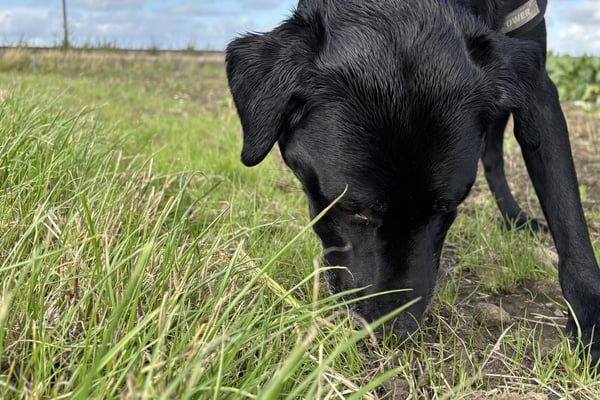
Grass weeds can be difficult to detect when the plants are small. The earlier they are found, the easier it is to apply the right measure where it is needed.
Barnyard grass illustrates why early detection matters. The weed is becoming increasingly common in Sweden, and a single plant can produce 1,000–2,000 seeds that can survive in the soil for a long time. In several European countries, barnyard grass has also developed resistance to herbicides.
In the latest trials, dog handler Britt and the dog Frej searched in cut rye. Frej found very small plants that were registered using GPS and then compared with the plants identified by an experienced advisor.
“The dogs’ strength is that they search for the scent of the weed instead of trying to distinguish it visually from the crop. In the project, we have seen that they can find very small plants that are difficult to detect. In the longer term, it is also interesting to see how the dogs’ sense of smell can be combined with human assessment together with technologies such as drones and AI,” says Linda Öhlund, Senior Plant Breeder at Lantmännen.
International research also suggests that dogs may have an advantage when weed plants are very small. In a US field study, trained dogs detected small plants of another weed species more often than people did. When the plants were larger, the difference was smaller. The study concerned a different weed species and therefore cannot be directly compared with the results of this project.
“The results so far are interesting. We are now analyzing the material to assess the method’s practical potential and where it could provide the greatest benefit,” says Pär-Johan Lööf, Head of R&D Agriculture at Lantmännen R&D.
Preparations and fieldwork have now been completed. Lantmännen is collaborating in the project with the Natural Resources Administration of the Västra Götaland Region, the Swedish University of Agricultural Sciences, SLU, and Svalöf Upper Secondary School. The project is funded by the Lantmännen Research Foundation.
Facts and more information
The project: The project started in 2025 and has now entered the analysis phase. The Natural Resources Administration of the Västra Götaland Region, Lantmännen and the Swedish University of Agricultural Sciences, SLU, are participating. The project also involves collaboration with Svalöf Upper Secondary School. It is funded by the Lantmännen Research Foundation.
Dogs, people and AI: The dogs search using their sense of smell, while people and cameras primarily search visually. In the longer term, the dogs’ searches could be combined with human assessment and technologies such as GPS, drones and AI. The methods could then complement each other and help detect weeds more accurately.
The weeds: The project covers black-grass, barnyard grass, rat’s-tail fescue and soft brome. These are grass weeds that can be difficult to detect at an early stage and may require specific control measures.
For more information
Lantmännen Press Office
+46 10 556 88 00
press@lantmannen.com