Lantmännen harvest forecast 2026: 5 million tonnes of grain
“This year’s forecast shows a clearly weaker harvest situation. The winter has had a severe impact, particularly on winter wheat, while farmers also face high costs and low grain prices. For many farmers, this amounts to a triple challenge: lower volumes, pressured grain prices and high production costs,” says Per Germundsson, Director Grain Business at Lantmännen.
The assessment is based on multiple data sources and indicates significant variations between regions and crops.
Winter crops showed promise ahead of the winter. However, conditions deteriorated rapidly and large areas were damaged by weather conditions, particularly in western Sweden and the Mälardalen region. In other parts of the country, winter crops have performed better, but areas such as Skåne and Gotland have instead been affected by early summer drought. Winter wheat in particular shows weak development.
Spring crops have had more favourable conditions and show better potential, provided that weather conditions remain favourable until harvest. The difference between winter and spring crops is significant, as winter-sown crops normally generate higher yields than spring-sown crops. When winter crops are damaged, the losses therefore cannot be fully offset by spring sowing. Overall, the wheat harvest is expected to be below normal.
A significant part of the growing season still remains, and, as always, the final outcome will depend on weather conditions leading up to and during harvest. Regular rainfall and moderate temperatures until the end of July would benefit the crops. Thereafter, dry weather is needed for harvesting.
External factors continue to put pressure on farmers
At the same time, farmers’ financial outlook is challenged by a number of external factors. Fertilizers, fuel and other inputs are affected by energy prices and the uncertain global situation. Grain price development has not compensated for the increase in costs, and Lantmännen’s calculations therefore show that profitability in arable farming is generally significantly weaker than last year. This risks affecting farmers’ future outlook and their ability to invest in increased production.
Farmers will soon make decisions regarding autumn sowing for the 2027 harvest. If the weak financial outlook leads to reduced autumn sowing, next year’s harvest may be negatively affected.
“To strengthen Sweden’s food preparedness, we need to increase domestic production. This requires profitability and investments across the entire food value chain, from agriculture to the food industry. Emergency stockpiles are important, but long-term resilience is built on our ability to produce and refine more food in Sweden,” says Magnus Kagevik, President and CEO of Lantmännen.
Facts and further information
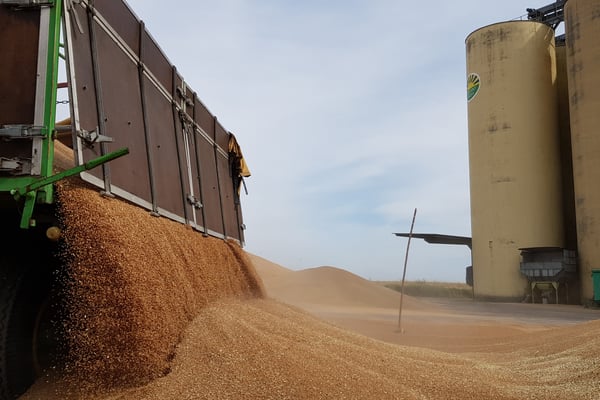
Forecast: Lantmännen’s forecast for 2026 is 5.0 million tonnes of grain, approximately 20 percent lower than the Swedish Board of Agriculture’s final harvest outcome of 6.4 million tonnes for 2025. This is also below the ten-year average of around 5.5 million tonnes.
Scope of the forecast: The forecast relates to harvest volumes. Quality can only be assessed once harvesting has begun.
Purpose of the forecast: Lantmännen produces an annual harvest forecast to provide an early, overall view of the year’s grain volumes and to support planning of logistics, intake capacity and prioritisation during the harvest period. The forecast is also communicated externally to increase understanding of the importance of the harvest for food production, farmers’ economy and the opportunities and challenges facing agriculture.
Ten-year average: The average is calculated based on the past ten harvests, excluding the highest and lowest values. For the period 2016–2025, the ten-year average is approximately 5.5 million tonnes.
Peas and field beans: The cultivation of peas and field beans is increasing. These crops require less fertilizer than grain and may therefore be more attractive under the current cost conditions.
Preparedness: Sweden is still assessed to produce more grain than is consumed domestically. However, if profitability in arable farming continues to be under pressure, investments and future cultivation may decline. Over time, this could lead to lower production and make it more difficult to strengthen Sweden’s food preparedness.
Basis for Lantmännen’s harvest forecast: The harvest forecast is based on a yield model that incorporates weather data, including precipitation and temperature, together with county-level crop area data reported by farmers to the Swedish Board of Agriculture. Historical data, such as yields from years with similar growing conditions, are also taken into account. Although the forecast is based on several verified data sources, there is always a degree of uncertainty, and it is important to remember that it is a forecast.
This year's forecast is particularly difficult to assess due to the extensive winter damage to autumn-sown crops. Weather conditions during the remainder of the growing season and throughout the harvest will also affect both the final harvest volume and crop quality. The actual outcome will not be known until farmers have completed the harvest and the results have been compiled.
For more information, please contact:
Niclas Karnhill, Media and PR Manager
Tel: +46 70 870 00 60
E-post: niclas.karnhill@lantmannen.com
Lantmännen Press Office
Phone: +46 10 556 88 00
E-mail: press@lantmannen.com