Lantmännen is an agricultural cooperative owned by Swedish farmers and is Northern Europe's leading player in agriculture, machinery, bioenergy and food.
Lantmännen
Lantmännen Finans
Lantmännen Fastigheter
Agriculture
Offers products and services for a strong and competitive agriculture. Imports, markets, sells and maintains agricultural machinery.
Lantmännen Lantbruk
LM2
Odla
Machines
Imports, markets, sells and maintains agricultural machinery.
Lantmännen Maskin
Online store
Energy
Harnessing the power of nature to create smart, climate-friendly energy solutions. Offers biofuels, feed and raw materials that make a difference for both customers and the climate.
Lantmännen Biorefineries
Food
Offers tasty, safe and sustainable products with some of the Nordic region's most beloved brands. Develops foods that simplify everyday life and meet the needs of the future.
Lantmännen Cerealia
Lantmännen Unibake
From field to fork
Lantmännen is an agricultural cooperative and Northern Europe's leading player in agriculture, machinery, bioenergy and food. Lantmännen is owned by 17,000 Swedish farmers with operations throughout the value chain from field to fork.
Our digital tools
LM²
This digital tool is aimed at you as a farmer. Here you buy grain, perform checkout services, order feed and spare parts for your machines and much more. Works just as well on mobile as on desktop.
More about LM2
The Lantmännen card
The Lantmännen card is for those who are active in the green industries, and shop at about 40 million places globally. Fuel discounts at almost 2000 stations in Sweden.
Log in
E-capital account
Lantmännen Finans savings account gives you good interest from the first krona, unlimited withdrawals and no fees. Here you can log in/open an e-capital account (savings account) with BankID.
Lantmännen is an agricultural cooperative owned by Swedish farmers and is Northern Europe's leading player in agriculture, machinery, bioenergy and food.
Lantmännen
Lantmännen Finans
Lantmännen Fastigheter
Agriculture
Offers products and services for a strong and competitive agriculture. Imports, markets, sells and maintains agricultural machinery.
Lantmännen Lantbruk
LM2
Odla
Machines
Imports, markets, sells and maintains agricultural machinery.
Lantmännen Maskin
Online store
Energy
Harnessing the power of nature to create smart, climate-friendly energy solutions. Offers biofuels, feed and raw materials that make a difference for both customers and the climate.
Lantmännen Biorefineries
Food
Offers tasty, safe and sustainable products with some of the Nordic region's most beloved brands. Develops foods that simplify everyday life and meet the needs of the future.
Lantmännen Cerealia
Lantmännen Unibake
From field to fork
Lantmännen is an agricultural cooperative and Northern Europe's leading player in agriculture, machinery, bioenergy and food. Lantmännen is owned by 17,000 Swedish farmers with operations throughout the value chain from field to fork.
Our digital tools
LM²
This digital tool is aimed at you as a farmer. Here you buy grain, perform checkout services, order feed and spare parts for your machines and much more. Works just as well on mobile as on desktop.
More about LM2
The Lantmännen card
The Lantmännen card is for those who are active in the green industries, and shop at about 40 million places globally. Fuel discounts at almost 2000 stations in Sweden.
Log in
E-capital account
Lantmännen Finans savings account gives you good interest from the first krona, unlimited withdrawals and no fees. Here you can log in/open an e-capital account (savings account) with BankID.
When grading improves, pay finally matches quality
With support from The Lantmännen Research Foundation, the Swedish company Cgrain has built AI-powered instruments that can assess grain quality equally good as an experienced human grader. Agronomist Anders Lindgren, who joined Lantmännen’s R&D team four years ago, has followed Cgrain’s journey as a specialist and project manager in grain quality.
Cgrain’s technology draws on decades of accumulated knowledge about grain. It helps Lantmännen get the quality right and the payment fair, all the way from field to fork. Today it is used across several parts of the business – when grain is delivered, when malting barley and oats are quality-checked, and as a tool for plant breeders.
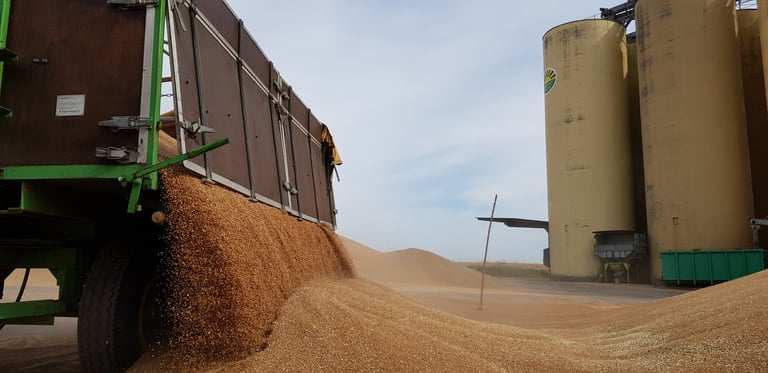
A batch of grain is rarely tested just once. When it arrives at a grain intake facility, a sample is analysed to decide how it should be stored and what quality it holds. Further down the chain, it is often tested again, for instance when malting barley reaches the maltings. That first test is about knowing how to handle the grain, but it also determines how much the farmer is ultimately paid.
– It is important that farmers get paid for the quality their batch actually has, and that becomes far more likely once the assessment no longer depends on one individual, says Anders Lindgren, grain quality expert at Lantmännen’s R&D team.
It is important that farmers get paid for the quality their batch actually has, and that becomes far more likely once the assessment no longer depends on one individual.
/Anders Lindgren
Expert in grain quality at Lantmännen's R&D department
/Anders Lindgren
Expert in grain quality at Lantmännen's R&D department
Take pink kernels, for example, a fungal infection in malting barley that can ruin the brewing process if it slips through to the malthouse. For years, this was a sore point: a farmer could be told their batch had failed without ever spotting a single pink kernel themselves, with no way of knowing who was right.
– From what I can tell, farmers have welcomed it. A result that is repeatable and objective is valuable for everyone in the chain, from farmer to malthouse, Anders notes.
A better product on the shelf
Nowhere is the link to the end product clearer than in the oat chain. Unlike wheat and rye, oats keep their husk after threshing, just like barley does. The colour of that husk, whether it looks greyish or not, determines the quality of the groats inside, something that used to come down to one person’s judgement.
– With Cgrain, we can read the colour of the husk and work out what the kernel inside looks like. We also use it to check whether the dehulling machine is doing its job properly or needs adjusting. That helps us get the end product right, whether it is plain rolled oats or a product from oat flour like breakfast cereals, Anders explains.
The technology has proved useful in plant breeding too, because the analysis leaves the kernel intact. Many methods call for the sample to be milled into flour first, which is not an option when there are only a handful of kernels to work with.
– If a small batch of kernels turns out to be of good quality, you want to be able to sow it again and keep the line going. Our plant breeders use Cgrain instruments for exactly that, Anders continues.
That, for Anders, is the whole point. The better the instruments get at spotting what the human eye cannot catch, the fairer the deal becomes for the 17,000 farmers who own Lantmännen.