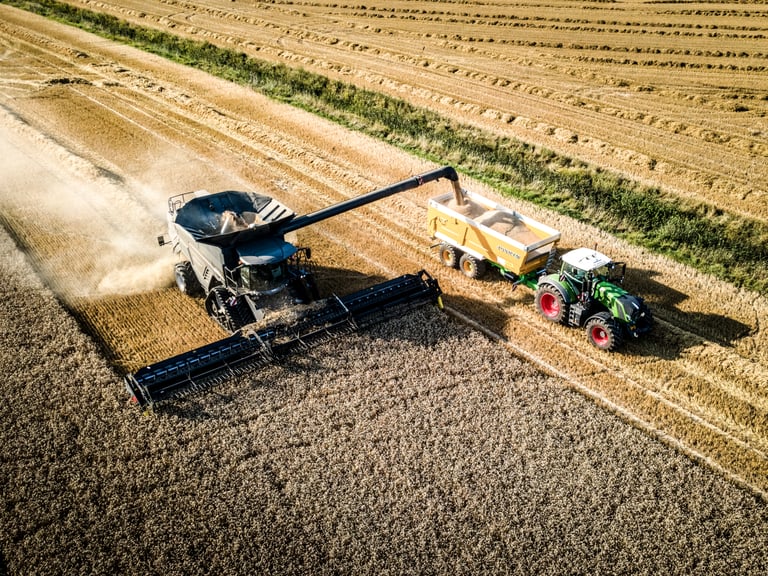
Lantmännen is an agricultural cooperative owned by Swedish farmers and is Northern Europe's leading player in agriculture, machinery, bioenergy and food.
Lantmännen
Lantmännen Finans
Lantmännen Fastigheter
Agriculture
Offers products and services for a strong and competitive agriculture. Imports, markets, sells and maintains agricultural machinery.
Lantmännen Lantbruk
LM2
Odla
Machines
Imports, markets, sells and maintains agricultural machinery.
Lantmännen Maskin
Online store
Energy
Harnessing the power of nature to create smart, climate-friendly energy solutions. Offers biofuels, feed and raw materials that make a difference for both customers and the climate.
Lantmännen Biorefineries
Food
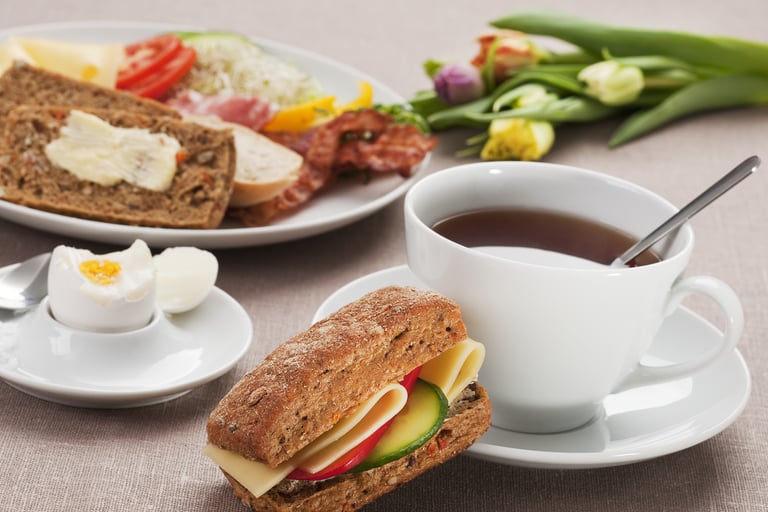
Offers tasty, safe and sustainable products with some of the Nordic region's most beloved brands. Develops foods that simplify everyday life and meet the needs of the future.
Lantmännen Cerealia
Lantmännen Unibake
From field to fork
Lantmännen is an agricultural cooperative and Northern Europe's leading player in agriculture, machinery, bioenergy and food. Lantmännen is owned by 17,000 Swedish farmers with operations throughout the value chain from field to fork.
Our digital tools
LM²
This digital tool is aimed at you as a farmer. Here you buy grain, perform checkout services, order feed and spare parts for your machines and much more. Works just as well on mobile as on desktop.
More about LM2
The Lantmännen card
The Lantmännen card is for those who are active in the green industries, and shop at about 40 million places globally. Fuel discounts at almost 2000 stations in Sweden.
Log in
E-capital account
Lantmännen Finans savings account gives you good interest from the first krona, unlimited withdrawals and no fees. Here you can log in/open an e-capital account (savings account) with BankID.
Lantmännen is an agricultural cooperative owned by Swedish farmers and is Northern Europe's leading player in agriculture, machinery, bioenergy and food.
Lantmännen
Lantmännen Finans
Lantmännen Fastigheter
Agriculture
Offers products and services for a strong and competitive agriculture. Imports, markets, sells and maintains agricultural machinery.
Lantmännen Lantbruk
LM2
Odla
Machines
Imports, markets, sells and maintains agricultural machinery.
Lantmännen Maskin
Online store
Energy
Harnessing the power of nature to create smart, climate-friendly energy solutions. Offers biofuels, feed and raw materials that make a difference for both customers and the climate.
Lantmännen Biorefineries
Food
Offers tasty, safe and sustainable products with some of the Nordic region's most beloved brands. Develops foods that simplify everyday life and meet the needs of the future.
Lantmännen Cerealia
Lantmännen Unibake
From field to fork
Lantmännen is an agricultural cooperative and Northern Europe's leading player in agriculture, machinery, bioenergy and food. Lantmännen is owned by 17,000 Swedish farmers with operations throughout the value chain from field to fork.
Our digital tools
LM²
This digital tool is aimed at you as a farmer. Here you buy grain, perform checkout services, order feed and spare parts for your machines and much more. Works just as well on mobile as on desktop.
More about LM2
The Lantmännen card
The Lantmännen card is for those who are active in the green industries, and shop at about 40 million places globally. Fuel discounts at almost 2000 stations in Sweden.
Log in
E-capital account
Lantmännen Finans savings account gives you good interest from the first krona, unlimited withdrawals and no fees. Here you can log in/open an e-capital account (savings account) with BankID.
Efficient grain assessment powered by Swedish-developed AI
When assessing grain quality, the industry has long relied on experienced graders – people who grade kernel by kernel using nothing but their eyes, sense of smell and touch. But these specialists are becoming harder to find. With a solution that combines AI, image analysis and research, Uppsala-based Cgrain is now challenging manual grading worldwide.
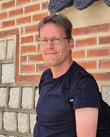
It began in 2013, when founder Jaan Luup teamed up with Lantmännen to establish the tech company Cgrain. Jonas Persson, who is responsible for software development, joined the company early on. The first product was launched in 2015 and is still in use today. Around 2017, AI technology started making a real difference, with deep learning introduced that same year.. In practice, that means the software learns on its own to identify defects and quality differences in grain, rather than following predefined rules.
– It became much easier, and the results improved significantly, Jonas Persson explains. Instead of writing code, we could now use deep learning to teach the system to recognise defective kernels by studying thousands of sample images.
It became much easier, and the results improved significantly. Instead of writing code, we could now use deep learning to teach the system to recognise defective kernels by studying thousands of sample images.
/Jonas Persson
Responsible for software development, Cgrain
/Jonas Persson
Responsible for software development, Cgrain
Trained on thousands of images Once grain has been harvested and is ready for delivery, its quality has to be assessed before it can be stored or used. Cgrain’s system works by analysing images of individual grain kernels. The AI is trained on vast numbers of images showing kernels with different defects and characteristics. It learns to recognise patterns much like an experienced grader would, but with the crucial advantage of being completely objective and delivering the same assessment every time.
– The system looks at the kernel itself and can generalise from what it has seen before. The AI is programmed to stick to what it has learned, so it doesn’t drift and pick up new patterns that risk being wrong. That gives us real consistency in the assessment, says Jonas.
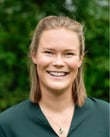
Although the technology is built on the same foundation, assessments vary between markets. Moa Källgren, Managing Director at Cgrain, has worked closely on adapting the company’s models to customers’ needs around the world.
– Grain can have a varying appearance depending on where it's grown – wheat from Sweden can look slightly different from wheat grown in southern Europe or North America. Even the definition of a defect can vary – what counts as a mouldy kernel differs between countries and companies, depending on how the regulations are set up, says Moa Källgren.
Grain can have a varying appearance depending on where it's grown – wheat from Sweden can look slightly different from wheat grown in southern Europe or North America. Even the definition of a defect can vary – what counts as a mouldy kernel differs between countries and companies, depending on how the regulations are set up.
/Moa Källgren
CEO Cgrain
/Moa Källgren
CEO Cgrain
Research collaboration drives development For a small tech company, research partnerships are essential. Cgrain has received ongoing support from Lantmännen Research Foundation and works closely with Uppsala University.
– It’s a cost-effective way for us to stay up to date while getting the most out of the knowledge that’s out there. Long-term research funding has been hugely important for our development and our ability to innovate, Jonas notes.
Moa Källgren goes even further in describing what that support has meant.
– The research collaboration has been central to Cgrain's technology development. The company was founded through a partnership aimed at finding a way to automate grading, and thanks to Lantmännen Research Foundation, we’ve been able to keep developing the technology further over the years, says Moa Källgren.
A recently completed project with Uppsala University confirmed that Cgrain’s deep learning methods meet a high standard. Focus has now shifted to the next research project: making the instruments more consistent with one another. Because the internal mirrors are mounted by hand, small optical variations arise between units – differences that currently mean the software must be calibrated individually for each instrument.
– We want a deeper understanding of why the instruments aren’t identical, and to find a way to make them more alike, Jonas says.
International expansion on the horizon Cgrain currently sells its systems across Europe, the US and Canada, but also South Africa and South America. Competition is intensifying, not least from Europe and China, but Cgrain holds a lead.
– We’re the only player with this type of technology to be approved by the USDA, the US Department of Agriculture, for analysing medium-grain rice. That’s given us an important edge and a strong working relationship with the agency, says Moa Källgren.
Jonas’s vision for the future is clear.
– In five years, I hope we’ll be the obvious choice instead of manual grading – a well-known manufacturer selling far more than we do today, says Jonas.
Moa Källgren shares that ambition as Cgrain's Managing Director.
– Our ambition is to become the new standard for visual grain grading. Our biggest competitor is still manual assessment – the industry is on the brink of a technology shift, and our job is to build confidence that the technology works, says Moa Källgren.
With support from Lantmännen Research Foundation and an ongoing partnership with Uppsala University, Cgrain is working towards that vision.