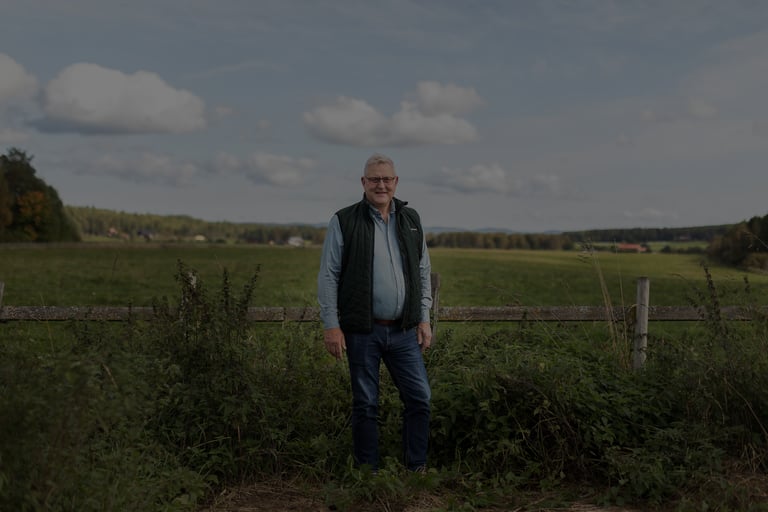
Lantmännen has recently committed 300 million SEK to The Lantmännen Research Foundation, a major investment in demand-driven agricultural and food research. The decision reflects a conviction that Jan-Erik Hansson, Chairman of Lantmännen’s Board and a working farmer with 1,200 dairy cows in Hälsingland, states plainly “without research and innovation, the industry cannot survive”.
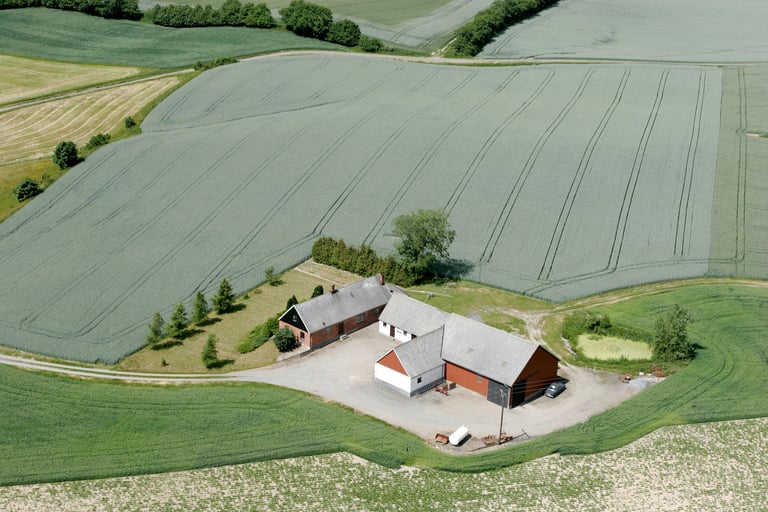
Jan-Erik Hansson is not the kind of farmer who is content to do things the way they have always been done. At Vallens Gård in Färila, Hälsingland, he is constantly looking for ways to improve, and innovation is a core part of the business strategy.
– If you stay at the forefront of development and innovation, it will pay off financially, he says. It is a philosophy that also shapes how he views the Foundation’s mission.
The Lantmännen Research Foundation was set up forty years ago to fill a gap.
– We could see that there was a lack of both funding and initiative for research and innovation in our industry. We felt a responsibility to act and had the means to do so. What sets the Foundation apart from other research funders is the close relation to farming. We stand with our boots on the ground and our hands in the soil. That keeps our priorities rooted in real needs, not in what looks good on paper, he explains.

Newfound freedom of action
The capital injection is about more than money. It’s about room to manoeuvre. Previously, the Foundation operated under a system with fixed annual disbursements. Now it can allocate funding based on what is applied for and where the greatest potential lies.
– Some years there will be a lot of excellent projects, and we can fund more of them. Other years, fewer. The Foundation now has real flexibility to make those calls itself, says Jan-Erik.
The decision was driven by Lantmännen’s strong financial position, long-running discussions about the right level of funding, and a desire from the Board to show genuine confidence in the Foundation.
Small steps, lasting impact
Ask Jan-Erik to name a single piece of research that has changed his farming and he struggles, because that’s not how research works. Change comes through an accumulation of small steps: advances in fertilisation, climate adaptation and resource efficiency that, taken together, shift the way you operate.
– The big challenges ahead are climate and sustainability. They are central to the long-term survival of farming, and they go hand in hand with productivity.
Looking further ahead, he sees the greatest potential in AI-driven precision farming: systems that can identify weeds and crop disease early, or keep watch over livestock and pick up on symptoms before they become expensive problems.
– The earlier you catch something, the smaller the intervention and the lower the cost to the farm, the environment and the animals.
He also points to the need to move away from chemical inputs in favour of biological alternatives such as microorganisms for crop protection and biofertilisers. And he is clear that the benefits of research extend well beyond the farm gate, into the mills, bakeries and biorefineries.
Research doesn’t reach farmers by itself
The gap between researchers and farmers is something Jan-Erik feels strongly about.
– It goes both ways. Many farmers don’t really understand what research does for them. But some researchers also lack a feel for what actually makes a difference on a working farm. We need to close that gap from both sides.
He hopes the Foundation can play a real part in making that happen.
– It’s a shame that so few farmers appreciate how important this work is, and how much the Foundation actually achieves. That’s something we need to work on together with the Foundation, he says, with a slight smile at his own choice of words.