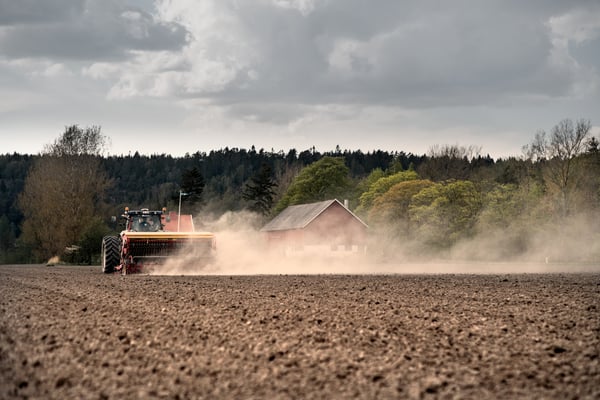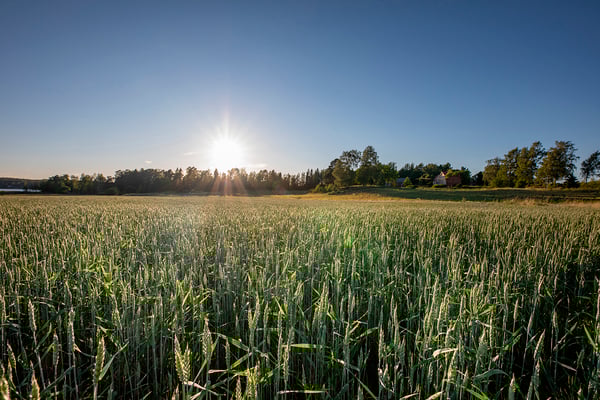
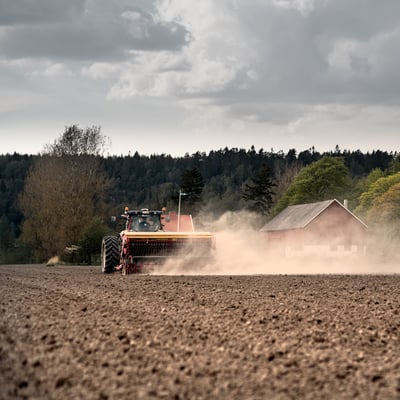
Spring fieldwork underway in southern Sweden – but an uncertain world is putting pressure on Swedish farmers
A harsh winter and weak margins
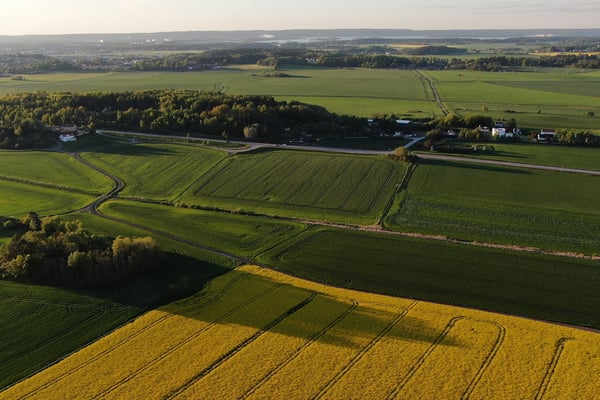
In parts of southern Sweden, some rapeseed fields are somewhat thin after the dry conditions last fall. The area sown in autumn was large ahead of winter, but conditions after the winter vary across the country. Lantmännen’s assessment is that frost damage is greatest in western Sweden, while winter damage is also occurring to varying degrees across central Sweden.
The general spring fieldwork season appears set to begin slightly later this year than it did in 2025.
"The overall situation looks good in southern Sweden, but at the same time it is difficult to provide a single national picture. Our preliminary assessment is that winter has hit crops hardest in western Sweden, while we are also seeing winter damage to varying degrees across central Sweden. The greatest impact on crops can be seen where snow cover was thin, or absent, in combination with cold and windy conditions. At the same time, margins are under pressure for many farmers. Fertilizer is the single largest cost, and the price is affected by factors in the wider world that we cannot control," says Johannes Åkerblom, Head of Crop Production at Lantmännen.
Uncertainty in the wider world is challenging farmers
Fertilizer and fuel are two of the most important agricultural inputs in arable farming, and both are quickly affected when the wider world becomes more uncertain. Several simultaneous conflicts and flashpoints have pushed up energy prices. Since natural gas is an important raw material in the production of nitrogen fertilizer, this has a direct impact on farmers’ costs, while EU charges on imported fertilizer are also contributing to higher prices. Grain prices have risen somewhat, but not enough to offset the increased costs of fertilizer, fuel, and other agricultural inputs. Lantmännen’s calculations for different crops therefore show that profitability is generally weaker this year than last year.
"Swedish farmers follow the energy market and global developments more closely than most people, because fertilizer prices are affected so quickly. European growers face both higher energy costs and EU import tariffs on fertilizer, while selling into the same grain market as producers with lower costs. If uncertainty in the wider world persists, it could have further negative consequences going forward, because higher costs for fuel and nitrogen fertilizer do not only affect farmers’ finances, but ultimately Swedish food production as well," says Patrik Myrelid, Chief Strategy Officer at Lantmännen.
There are several ways to strengthen Swedish agriculture, food production, and, in the longer term, Sweden’s preparedness, according to Patrik.
"First, buy Swedish the next time you go grocery shopping. Only around half of the food we eat is produced domestically, which creates a vulnerability in our preparedness. Second, the government and public authorities need to continue and deepen plans for emergency stockpiles. Third, we must work toward domestic production of key agricultural inputs," concludes Patrik Myrelid.
Facts and more information
Overall situation: Spring sowing is now in full swing in southern Sweden. Winter has left its strongest mark in western Sweden, but winter damage is also visible to varying degrees across central Sweden. In parts of southern Sweden, fertilization of winter rapeseed and large parts of the winter wheat crop is already underway. Developments from here remain weather-dependent. Pea cultivation, which does not require the same level of fertilizer investment, has increased significantly according to preliminary figures.
Economy: Fertilizer and fuel remain two of the largest cost items in arable farming. Rising energy prices have pushed fertilizer prices higher, and EU charges and tariffs are also contributing to higher costs for imported fertilizer. A large share of the nitrogen fertilizer needed for the current spring fieldwork season has already been purchased, but at high prices, and many farmers will soon need to buy fertilizer for the next growing season.
Supply: Swedish agriculture depends on agricultural inputs such as nitrogen fertilizer being available at the right time. Prolonged international conflicts risk affecting the market more significantly ahead of the fall and over the longer term. Sweden also lacks domestic mineral fertilizer production, which makes the system more vulnerable in the event of prolonged disruption in the wider world.
For more information, please contact:
Lantmännen's Press Office
Tel: +46 10 556 88 00
E-mail: press@lantmannen.com