EU Commissioner Jessika Roswall visits Lantmännen – bioeconomy, climate benefits and resilience
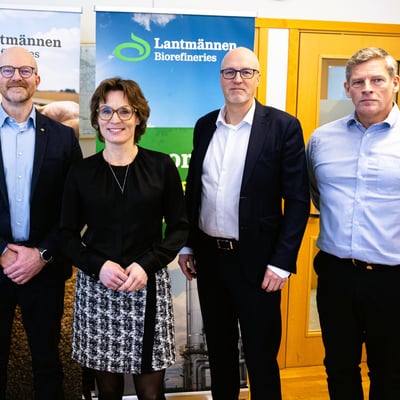
"This is an example of how Swedish industry can combine competitiveness with high resource efficiency and tangible climate benefits," says Per Arfvidsson, Deputy CEO of Lantmännen.
At the facility, ethanol with substantial carbon dioxide savings is produced, along with protein for food and feed, and feedstock for the chemicals and materials industries. The raw materials are utilized efficiently across multiple value streams.
During the discussions, it was noted that only around two percent of the EU’s grain is used for fuel ethanol, and that ethanol produced within the EU delivers, on average, approximately 80 percent lower carbon dioxide emissions compared with fossil fuels. At the same time, EU road transport remains heavily dependent on fossil energy, with petrol and diesel together accounting for more than 90 percent of energy use.
"To meet climate targets while strengthening Europe’s resilience, long-term, technology-neutral framework conditions are required," says Alarik Sandrup, Director of Public Affairs at Lantmännen.
Through its biorefinery operations, Lantmännen can contribute practical experience from applied bioeconomy solutions, where agricultural raw materials are used across multiple stages. In dialogue with policymakers, the company seeks to contribute to discussions on how food, energy and industry can develop in parallel, with a focus on lower emissions and stronger preparedness.
For more information, please contact
Lantmännen Press Office
Tel: +46 10 556 88 00
Email: press@lantmannen.com